ANNUAL GENERAL MEETING OF OEB – APRIL 28, 2026
Energy and Environment – Developments in 2025
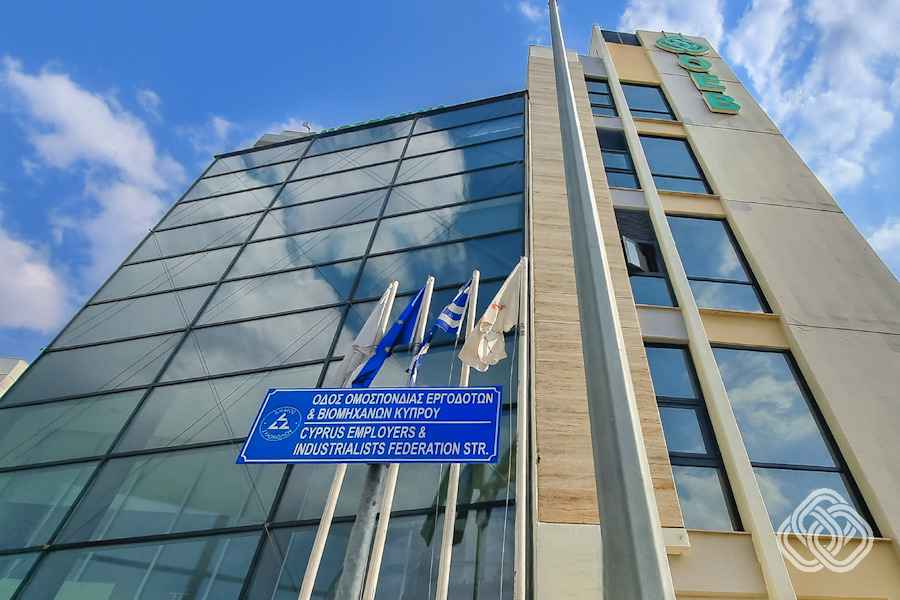
On the occasion of the Annual General Meeting of the Cyprus Employers & Industrialists Federation (OEB) to be held on Tuesday, April 28, 2026 and which will be addressed by the President of the Republic of Cyprus, Mr. Nicos Christodoulides, OEB issues the following communiqué.
The Employers and Industrialists Federation (OEB) continues to play a key role in shaping policies and interventions related to energy, the environment and sustainable development, with a view to enhancing the competitiveness of Cypriot businesses and ensuring a fair and realistic green transition.
2025 was marked by significant and multi-level developments in the fields of energy and the environment, as Cyprus continued its path towards achieving national and European climate neutrality targets, in an environment of increased pressures on energy costs and intensifying environmental challenges.
A particularly important development was the full operation of the Competitive Electricity Market, which creates the conditions for strengthening competition and more efficient pricing in the long run. At the same time, the promotion of electricity storage projects emerged as a critical factor for the flexibility of the electricity system, the reduction of cuts and the further increase of the penetration of Renewable Energy Sources.
The Great Sea Interconnector project remained at the center of the public debate, as it is a project of high strategic importance, but also of increased technical, financial and geopolitical uncertainties. OEB closely monitored the developments, underlining the need for transparency, a documented cost-benefit assessment and a simultaneous examination of alternative energy options that will ensure the competitiveness of the economy.
In the field of natural gas, the developments around the FSRU “Prometheus” and the related infrastructure, confirmed the importance of the fuel as a transitional solution for the reduction of energy costs and emissions, but also the need for the timely completion of the necessary infrastructure for its substantial integration into the country’s energy mix.
At the same time, OEB placed particular emphasis on the promotion of “green” hydrogen, which is becoming increasingly important in the context of the European and national decarbonization strategy, as well as on the implementation of the revised European Directive on the Energy Performance of Buildings, which introduces new stricter requirements for the building sector and the construction industry.
The common denominator of the above developments remains the high cost of energy, which continues to be a key challenge for the competitiveness of businesses. OEB submitted documented proposals with the aim of reducing costs and improving the operation of the market.
As far as the environment is concerned, the water crisis emerged as one of the most serious challenges of the year, intensifying the need for structural solutions, as well as investments in the saving, efficient management and reuse of water resources. At the same time, the update of the National Strategy for Adaptation to Climate Change was completed, strengthening the national planning for resilience until 2050.
Businesses were also asked to adapt to the new European requirements for Sustainability Reports, which included significant simplifications for small and medium-sized enterprises. In addition, OEB actively contributed to the public debate on the Social Climate Plan, submitting targeted proposals for the just transition.
During 2025, as part of its energy and environment strategy, OEB focused on the following, among others:
- Revision of the National Energy and Climate Plan (NECP), with interventions regarding the redefinition of targets and timetables, the operation of the Energy Strategy Council and the need to suspend green taxation.
- Transition of the self-consumption framework from Net-Metering to Net-Billing and the need to provide clear, official and timely information to businesses and professionals in the sector.
- Addressing RES cuts, enhancing demand shifting, and promoting a framework for the development and operation of electricity storage systems.
- Recommendations on the sustainability of the RES & ESE Fund and the continuation of the implementation of financing programs that contribute to the reduction of energy costs for businesses and households.
- Adjusting prices by enhancing differentiated pricing periods to more accurately reflect actual demand profiles and production costs during the day.
- Participation in consultations on European and national strategies, such as the Clean Industrial Deal and the Strategy for the Enhancement of the Competitiveness and Internationalization of Cypriot Industry.
- Submission of proposals for a series of bills and regulations in the field of environment and waste management, contributing to the formation of a more functional, effective and enforceable regulatory framework.
- Participation in the European program “TRIERES”, with the aim of strengthening know-how and preparation for the development of green hydrogen valleys in Cyprus, in connection with the European strategies for decarbonization.
- Continuation and implementation of actions under the Measure “Promotion of the circular economy in hotel facilities”, which is part of the National Recovery and Resilience Plan, with an emphasis on the practical implementation of sustainable solutions in the tourism sector.
Finally, the assumption of the Presidency of the Council of the European Union by Cyprus in the first half of 2026 is an important opportunity to shape a more competitive, green and fair European energy policy. OEB actively supports the Cyprus Presidency, submitting documented and realistic positions for the benefit of the economy and entrepreneurship.
All of the above will be discussed during the Annual General Meeting of OEB to be held on Tuesday, April 28, 2026 at 12:00 p.m. at The Landmark Nicosia Hotel.